A small-business reception checklist for common calls
A friendly first response works better when the business has decided what to say, what to capture, and when a caller should reach a person.
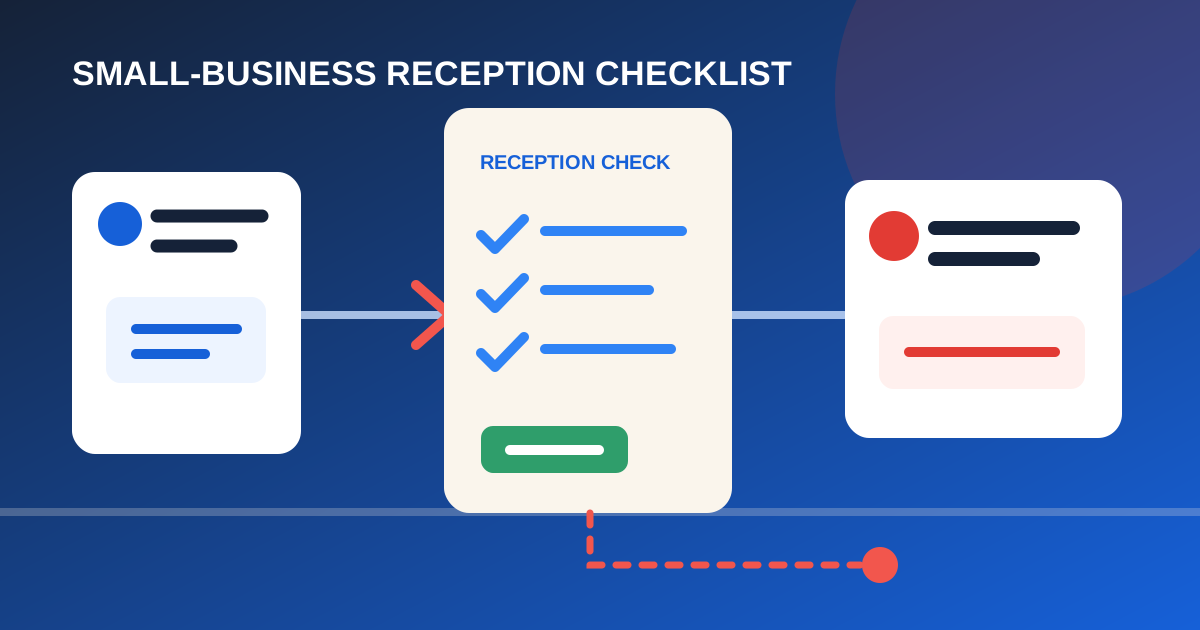
For a small business, the phone line is often the first place a caller experiences the business. A useful reception path does not need to be complicated. It needs a welcoming greeting, clear answers for familiar questions, and a next step that the business can stand behind.
Write the first greeting in the business’s own voice
Start with how the business wants callers to be welcomed and what they should understand right away. A simple greeting can set expectations, invite the caller to explain why they reached out, and make the first conversation feel connected to the business rather than a generic phone tree.
- the greeting and basic information the business wants callers to hear;
- the common questions that have approved answers;
- the message or appointment-request details the team needs next; and
- the calls that should reach a person for another decision.
Keep common questions clear and useful
Everyday questions should be answered in plain language based on what the business has approved. If the caller needs more than that, the reception path can explain the next step rather than guessing. That gives the business a consistent first response without pretending every inquiry has the same answer.
A small-business reception line is most helpful when the caller knows what happens next before the conversation ends.
Make message and appointment requests understandable
When a caller wants to leave a message or ask about an appointment, gather the details the team has chosen and make the expected next action clear. The business remains responsible for confirming the request or making any service decision; the first response creates an organized starting point.
Give exceptions a human route
Some callers will have a question, change, or situation that does not fit the usual path. Set out when those calls should move to a person and carry forward the context already gathered. That helps the caller avoid repeating the reason for the call.
USA Data Store helps small businesses define a friendly, practical first response for their everyday inbound calls. See How It Works, read the FAQ, or talk through your reception flow.